

NEWSLETTER September 2026
CEPA’s vision for a stronger and more visible pest management sector
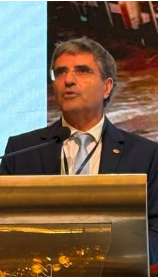 In a recent interview with INFOPLAGAS, CEPA President Marc Aubry shared his perspective on the priorities and future direction of professional pest management in Europe.
CEPA’s work currently focuses on four main areas: representing the sector in European regulatory discussions, promoting professional standards through EN 16636 and CEPA Certified®, strengthening the industry’s role within the One Health framework, and helping the sector attract and retain skilled professionals.
A key message from the interview is that pest management must be recognised for the full value it creates. The sector’s work extends far beyond the application of biocides: it protects public health, supports food safety, prevents the spread of zoonotic diseases, safeguards
buildings and cultural heritage, and contributes to more resilient cities and communities.
Marc also highlights the need for balanced, science-based regulation. While CEPA supports Europe’s sustainability ambitions, removing effective pest management tools without viable alternatives could create unintended risks. A genuine Integrated Pest Management approach should therefore combine prevention, monitoring, digital solutions and non-chemical methods, while retaining access to chemical products when they are necessary as a last resort.
Technology will be central to the sector’s development. Connected devices, remote monitoring, computer vision, data analytics and artificial intelligence are already helping companies move from reactive treatments towards predictive, outcome-based services. These tools can also improve traceability, reduce unnecessary biocide use and demonstrate the sector’s contribution to
sustainability.
Finally, the interview underlines an important communication challenge: successful prevention is often invisible. CEPA and its national associations therefore need to improve their ability to quantify and communicate the value of professional pest management. Looking ten years ahead, Marc expects a more professional, digital, integrated and widely recognised industry—one seen as an essential contributor to public health, food security, sustainability and climate resilience.
Source: Interview with Marc Aubry, President of CEPA, prepared for publication by INFOPLAGAS.
Europe strengthens its focus on rodent-borne disease risks
A new European initiative highlights why the role of professional rodent management in protecting public health deserves increasing attention.
In May 2026, COST approved ONE-LEP, the One Health European Network for Leptospirosis and Rodent-Borne Threats, which brings together expertise from human health, veterinary medicine, epidemiology, microbiology, ecology, wildlife management and rodent management. Its ambition is to improve European coordination around leptospirosis while developing approaches that can also support management of other rodent-borne diseases.
The development is highly relevant for the professional pest management sector.
The ONE-LEP documentation describes a European situation characterised by increasing rodent populations, resistance to anticoagulant rodenticides, growing expectations for humane rodent control, environmental and climatic change, and important gaps in surveillance and diagnosis of leptospirosis. Together, these factors make effective rodent management an increasingly important element of the wider One Health agenda.
Why should pest management professionals pay attention?
Rodents are important reservoirs of Leptospira and a range of other zoonotic pathogens. The document highlights the brown rat (Rattus norvegicus), black rat (Rattus rattus) and house mouse (Mus musculus) in particular, and points to the increasing public-health, veterinary and ecological importance of rodent populations in Europe.
The available European data also deserve attention. Notifications of human leptospirosis increased by around 5% annually between 2010 and 2021, while surveillance and diagnosis remain inconsistent and the true disease burden is considered underestimated. The document furthermore identifies flooding, urbanisation, land-use change and climatic variability among factors that can influence disease emergence and transmission.
Perhaps most importantly for our sector, ONE-LEP includes rodent ecology and management directly within its work programme. One of its five working groups will address surveillance, pathogen ecology and management, including a review of existing European protocols on environmental risk reduction and rodent population control.
From pest control to public-health protection
For pest management professionals, this initiative is worth watching closely. It reinforces a broader development in which professional rodent management is connected not only with controlling an infestation, but also with prevention, surveillance and reducing risks at the human-animalenvironment interface.
ONE-LEP plans to develop harmonised approaches covering diagnostics, surveillance, environmental sampling, risk factors, data sharing and disease control. The network also intends to work with organisations including the European Centre for Disease Prevention and Control (ECDC) and the European Food Safety Authority (EFSA) and engage stakeholders from research, government and industry.
Our message: stay alert.
Rodent-borne disease prevention may become an increasingly important part of the conversation around professional rodent management in Europe. Follow this initiative closely, consider how
rodent activity and environmental conditions are documented in your own work, and watch for the guidelines, surveillance approaches and knowledge emerging from ONE-LEP.
This is an area where our industry has relevant practical expertise, and one where science, public health and professional pest management are increasingly coming together.
Source: COST Action CA25142, One Health European Network for Leptospirosis and Rodent-Borne Threats (ONE-LEP), approved 19 May 2026.